Diode Forward Bias with a Voltmeter and an Ammeter
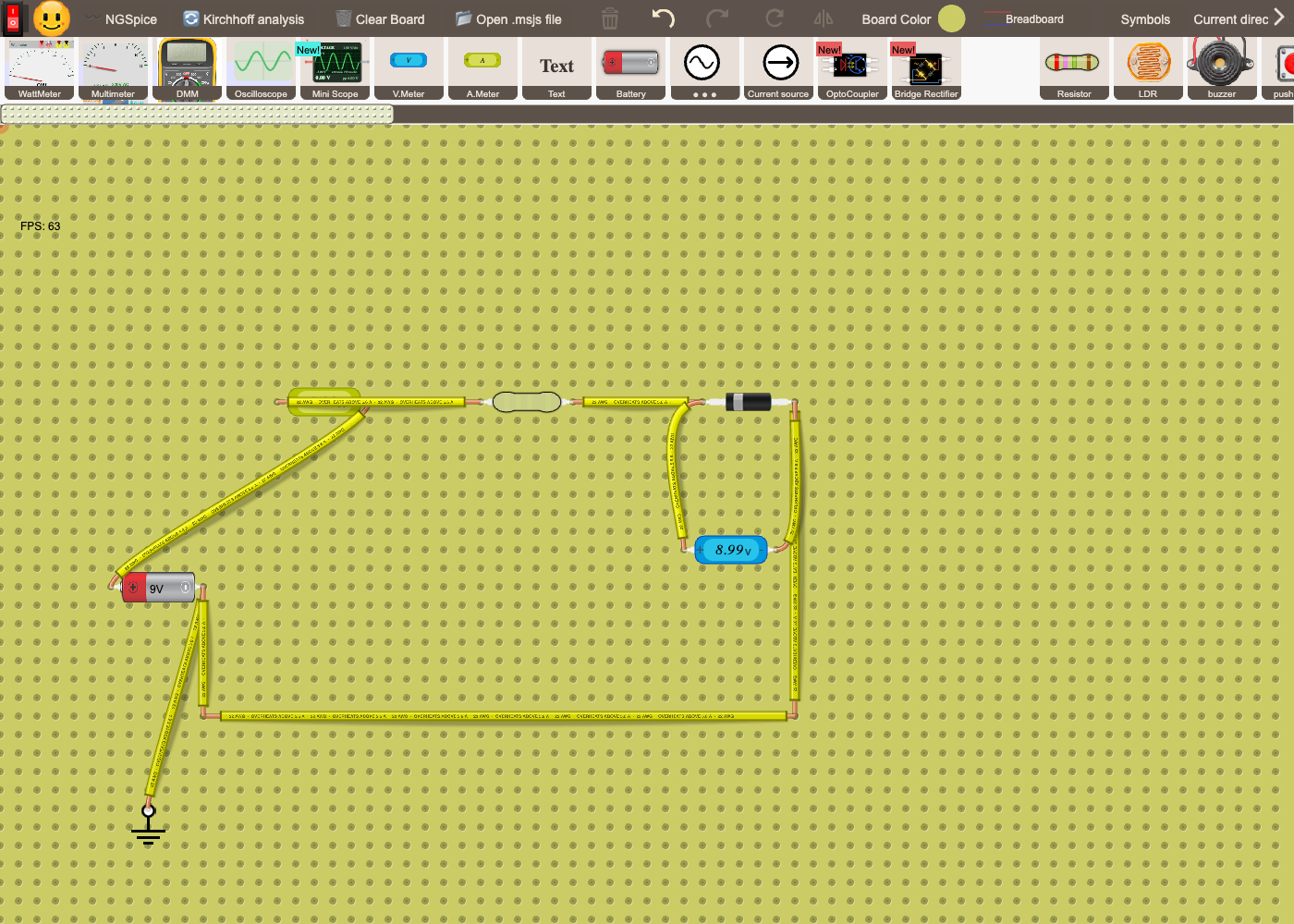
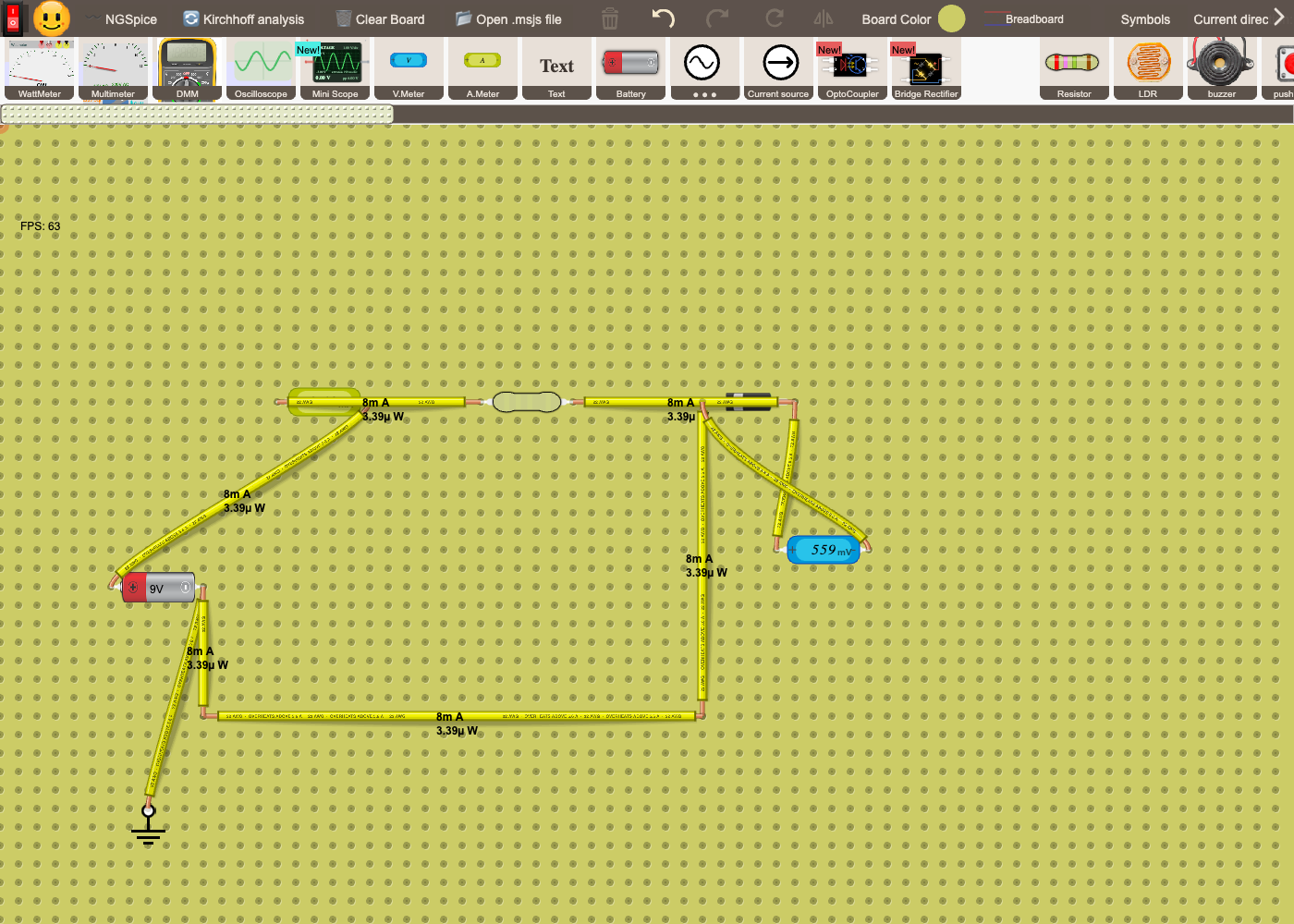
A 9 V battery drives a silicon diode through a 1 kΩ resistor. The voltmeter across the diode reads about 0.56 V and the ammeter about 8.4 mA.
Learn to use a multimeter, with circuits you can measure
Learn how diodes work, with circuits you can try
Want to build your own circuit? Start a new circuit in the circuit simulator
Teaching with circuits?
Create a classroom, give your students a circuit to build, and review what they submit. Try it free with one classroom and up to 5 students.
Try the free classroom demoHow it works
The 9 V battery, a 1 kΩ resistor and a diode make one loop. The diode is forward biased, so it conducts, and it drops only about 0.56 V at this current. The resistor takes the rest: (9 − 0.56) V ÷ 1 kΩ is about 8.4 mA, which the ammeter shows (8.44 mA with NGSpice on).
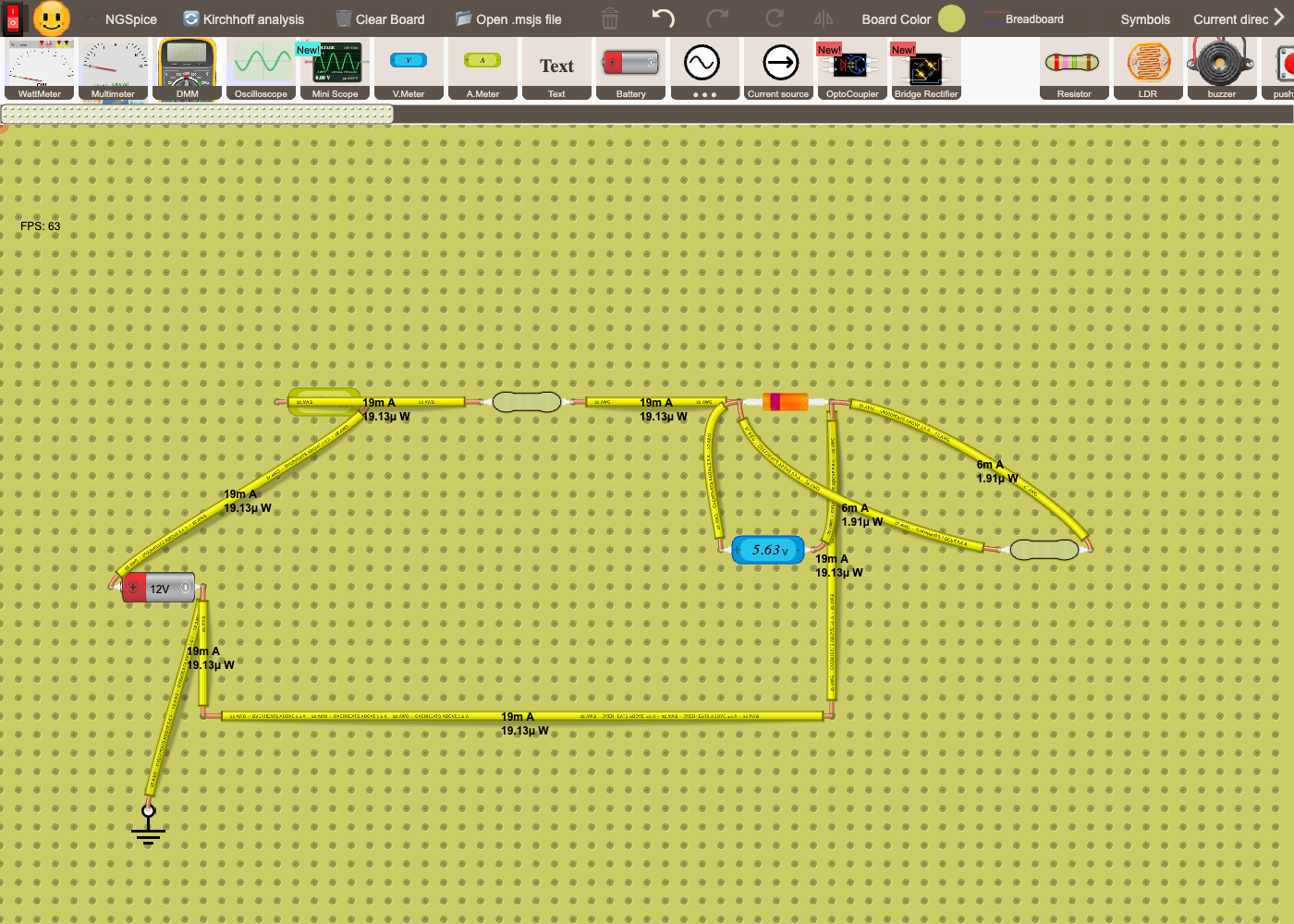
Try a 100 Ω resistor: the current rises to about 83 mA and the drop only to about 0.68 V. A diode's voltage changes slowly while its current changes a lot. The lab models a plain silicon diode that drops about 0.8 V at 1 A; edit the forward drop in the inspector to change the curve.
What's inside
- 1× Battery
- 1× Resistor (1 kΩ)
- 1× Diode
- Measured with Voltmeter/Ammeter