Zener Diode Voltage Regulator with a Load
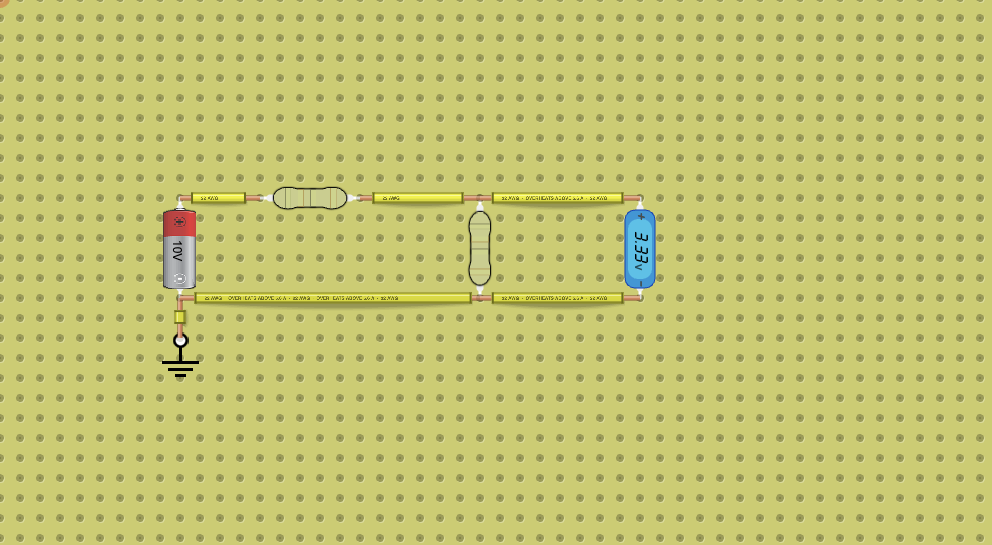
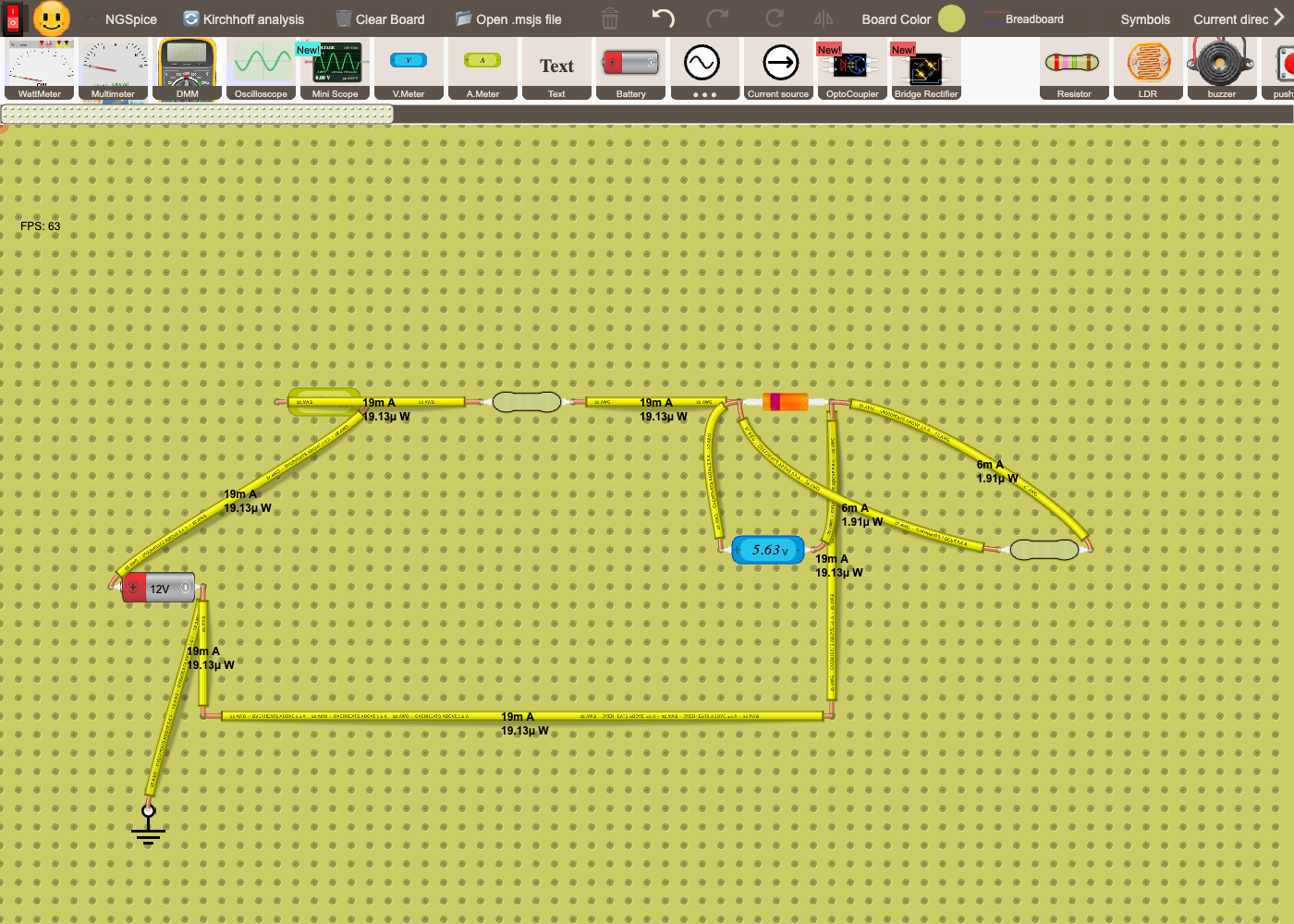
A 12 V battery feeds a 5.6 V Zener diode through 330 Ω with a 1 kΩ load across it. The output sits at about 5.63 V.
Learn to use a multimeter, with circuits you can measure
Learn how diodes work, with circuits you can try
Want to build your own circuit? Start a new circuit in the circuit simulator
Teaching with circuits?
Create a classroom, give your students a circuit to build, and review what they submit. Try it free with one classroom and up to 5 students.
Try the free classroom demoHow it works
The Zener diode is wired in reverse across the load. Past its 5.6 V breakdown it conducts and holds the voltage: the voltmeter reads about 5.63 V across the 1 kΩ load. The ammeter reads the total current from the battery, about 19.3 mA: about 5.6 mA goes through the load and about 13.7 mA through the Zener.
Change the battery to 9 V or 15 V and the output moves only a little (about 5.60 V and 5.64 V), while the current through the Zener changes a lot. Make the load heavier (a smaller resistor) and the Zener current drops; if the Zener current reaches zero the regulator stops regulating. The lab models a Zener with 5 mA at its breakdown voltage; set the Zener voltage in the inspector.
What's inside
- 1× Battery
- 2× Resistor (330 Ω, 1 kΩ)
- 1× Diode
- Measured with Voltmeter/Ammeter