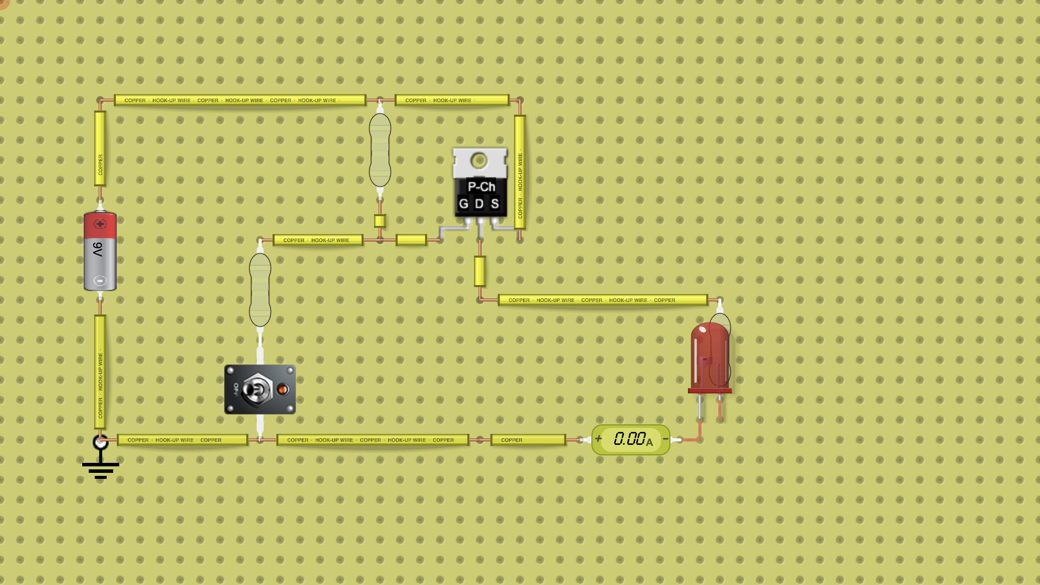
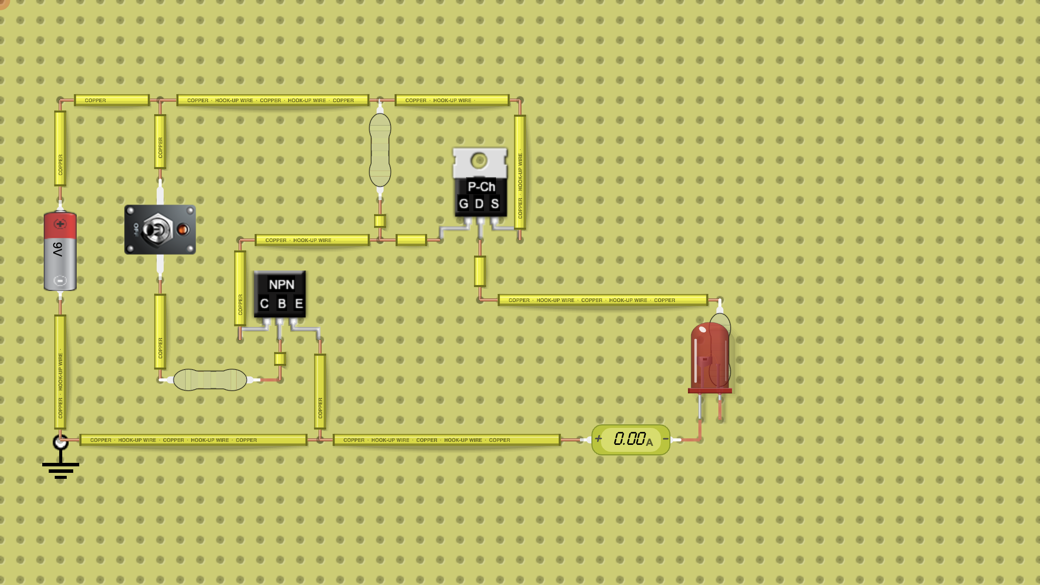
Ammeter Across a Resistor: the Short-Circuit Mistake
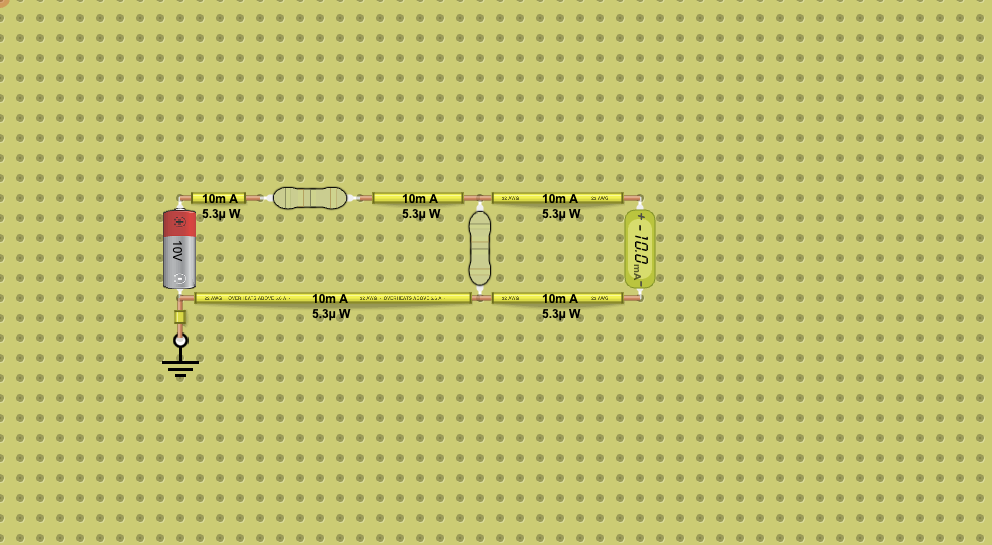
An ammeter placed across a resistor instead of in series shorts it out: the loop current doubles to 10 mA, all of it through the meter.
Mengajar dengan litar?
Cipta kelas, beri pelajar litar untuk dibina dan semak hasil yang mereka hantar. Cuba secara percuma dengan satu kelas dan sehingga 5 pelajar.
Cuba demo kelas percumaHow it works
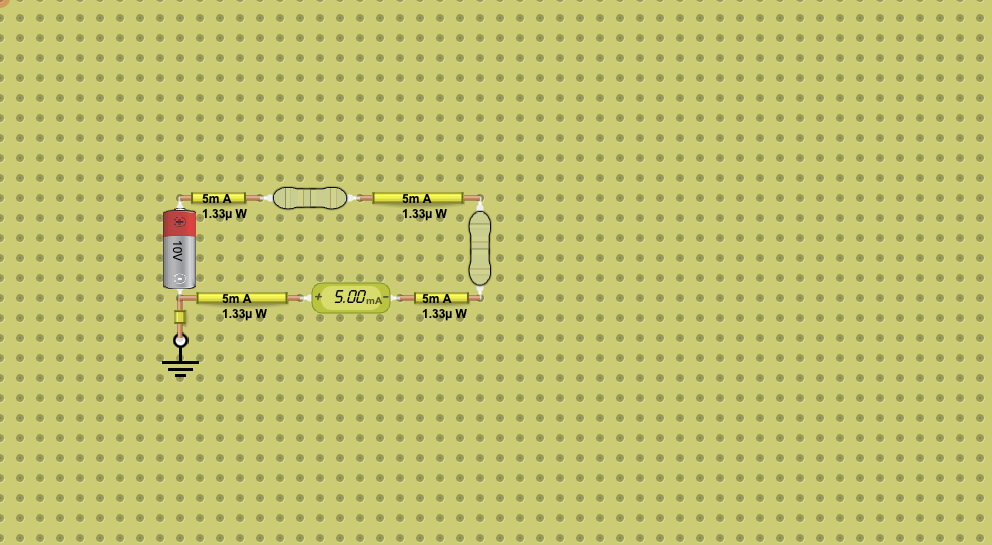
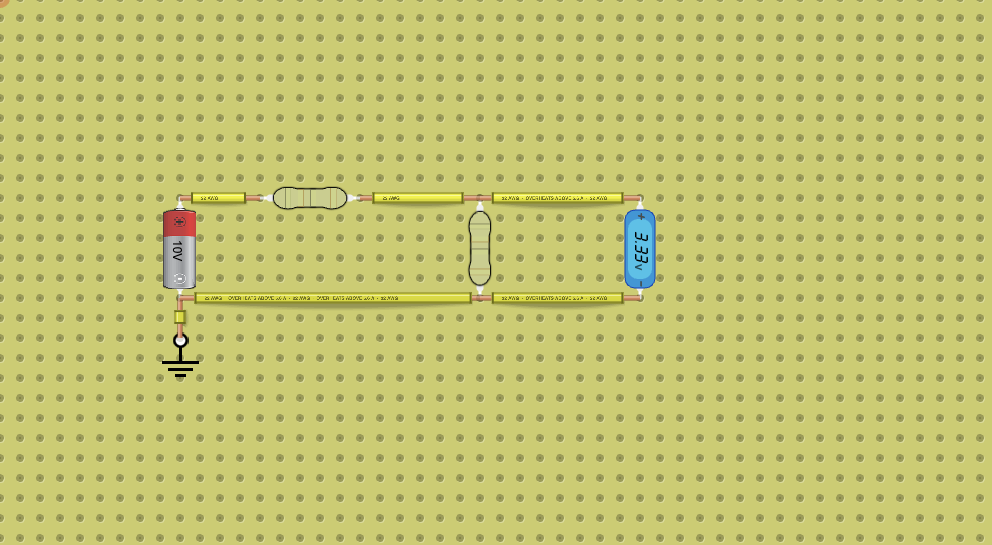
An ammeter has almost no resistance, so it belongs in series. Here it is wired across the right-hand 1 kΩ resistor of a 10 V, 1 kΩ + 1 kΩ loop instead. It shorts that resistor out: the only resistance left is the other 1 kΩ, the loop current doubles from 5 mA to 10 V / 1 kΩ = 10 mA, and all of it flows through the meter.
The meter shows -10.0 mA; the minus sign only means the current enters it through the other lead. On a real meter, an ammeter across a supply with nothing in series is how its fuse blows.
What's inside
- 1× Battery
- 2× Resistor (1 kΩ)
- Measured with Voltmeter/Ammeter