DC Motor Speed, Current and Stall Lab
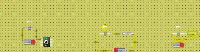
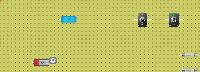
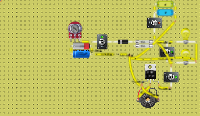
A 12 V battery runs a DC motor through a switch and a 15 A fuse: about 3000 rpm and 1 A with no load. Lower the voltage, add load, reverse the battery or…
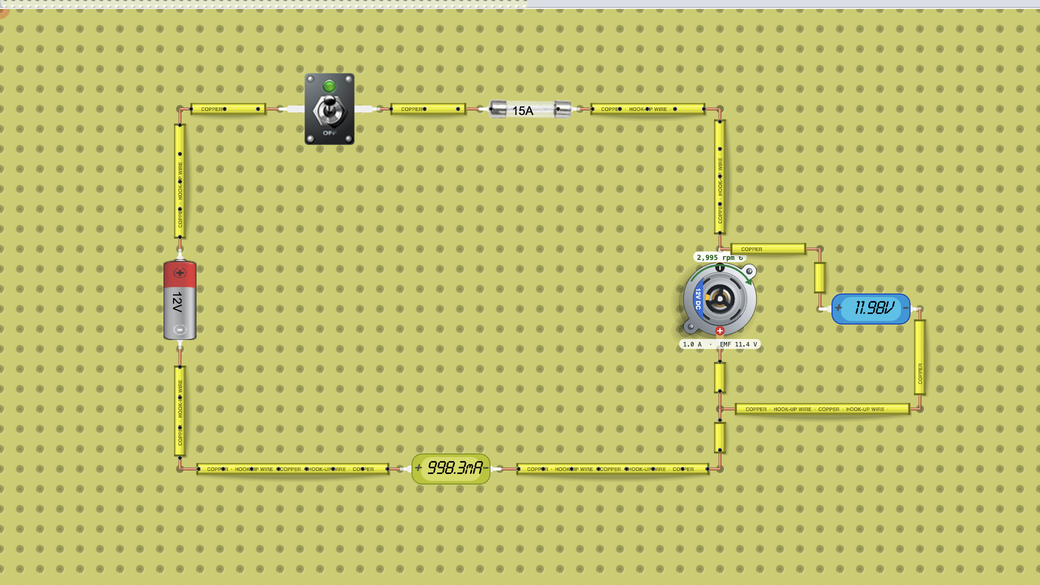
Use this circuit in class: DC motor experiment: speed, current and back-EMF
Teaching with circuits?
Create a classroom, give your students a circuit to build, and review what they submit. Try it free with one classroom and up to 5 students.
Try the free classroom demoHow it works
A DC motor is a winding and a magnet: the current turns the rotor, and the turning rotor makes a back-EMF that pushes against the battery. That is why a free-running motor draws only about 1 A here, while a stalled one draws V ÷ R, up to 20 A at 12 V.
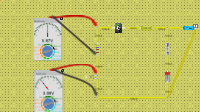
Change the battery voltage, the motor’s Load (%) and Locked rotor settings, or flip the battery, and read the speed, the current and the back-EMF on the motor’s labels. The 15 A fuse protects the motor if it stalls at full voltage.
What's inside
- 1× Battery
- 1× Switch
- 1× Fuse
- 1× DC Motor
- Measured with Voltmeter/Ammeter