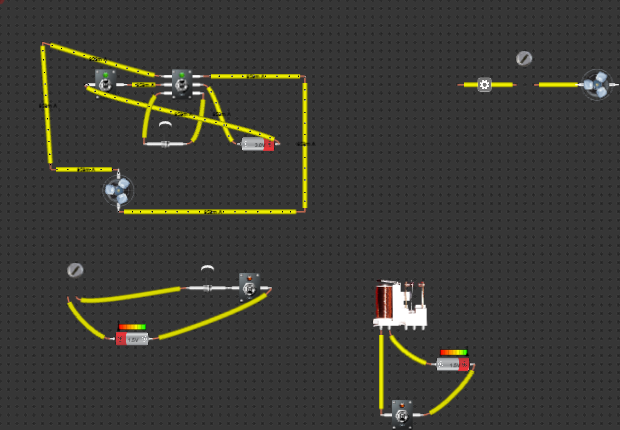
Wheatstone Bridge Circuit
Wheatstone Bridge: The Wheatstone Bridge is an electrical circuit used to measure an unknown resistance by balancing two legs of a bridge circuit. It was…
¿Enseñas con circuitos?
Crea un grupo, deja un circuito a tus alumnos y revisa lo que entregan.
Ver planes para maestrosCómo funciona
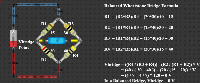
Wheatstone Bridge:
The Wheatstone Bridge is an electrical circuit used to measure an unknown resistance by balancing two legs of a bridge circuit. It was invented by Samuel Hunter Christie in 1833 and popularized by Sir Charles Wheatstone in 1843. The bridge consists of four resistors connected in a diamond-shaped configuration, with a voltage source applied across the circuit and a galvanometer to detect current flow.
Why Do We Use the Wheatstone Bridge?
To Measure Unknown Resistance: It is primarily used to determine the value of an unknown resistance with high precision by comparing it to known resistances.
High Accuracy: The bridge provides more accurate results than direct measurements with an ohmmeter because it eliminates errors caused by variations in voltage and current.
Wheatstone Bridge Formulas:
R1 = (R2 × R3) / R4
R2 = (R1 × R4) / R3
R3 = (R1 × R4) / R2
R4 = (R2 × R3) / R1
Rasistance Calculation:
Formula for R1:
Qué contiene
- 1× batería
- 4× resistencia (15 Ω, 20 Ω, 40 Ω, 30 Ω)
- Medido con voltímetro/amperímetro