Ammeter Across a Resistor: the Short-Circuit Mistake
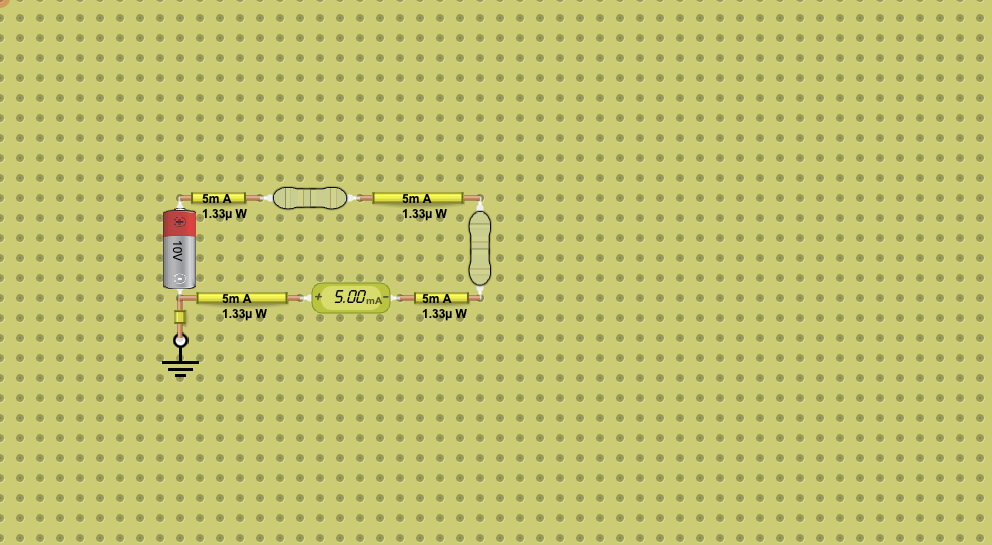
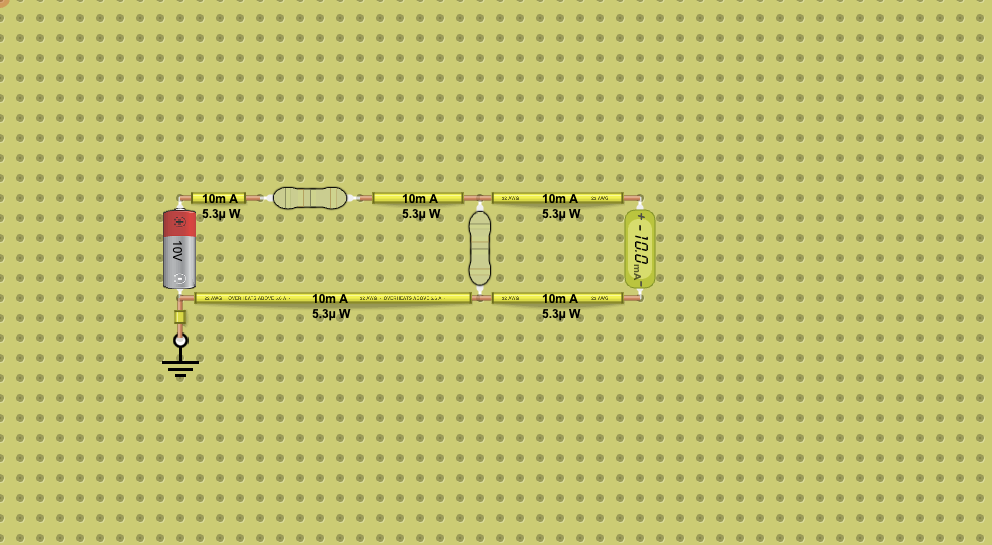
An ammeter placed across a resistor instead of in series shorts it out: the loop current doubles to 10 mA, all of it through the meter.
Aprende a usar un multímetro, con circuitos que puedes medir
¿Enseñas con circuitos?
Crea un grupo, deja un circuito a tus alumnos y revisa lo que entregan. Pruébalo gratis con un grupo y hasta 5 alumnos.
Prueba gratis la demo para maestrosCómo funciona
An ammeter has almost no resistance, so it belongs in series. Here it is wired across the right-hand 1 kΩ resistor of a 10 V, 1 kΩ + 1 kΩ loop instead. It shorts that resistor out: the only resistance left is the other 1 kΩ, the loop current doubles from 5 mA to 10 V / 1 kΩ = 10 mA, and all of it flows through the meter.
The meter shows -10.0 mA; the minus sign only means the current enters it through the other lead. On a real meter, an ammeter across a supply with nothing in series is how its fuse blows.
Qué contiene
- 1× batería
- 2× resistencia (1 kΩ)
- Medido con voltímetro/amperímetro